
Kitto Blog

Uncategorized

Easy (honestly!) ways to administer medications

Cats get sick. Not just the routine hairball / mucus stuff, but truly legit ‘run to the vet and pray everything will be ok’ kind of sick.

I think we all remember that first time. In my case, it was several years ago when Buttons was just a little tyke. She was limping. Not bad, and not enough to notice right away, but enough for me to check her paw……take a closer look….. and freeeeaak out!!! There was a red patch – a sore? – that was raw from lots of licking.

First, the ‘will she be ok’ panic sets in. This is where you hope Google is going to remedy everything by providing an ‘oh, that is just a such and such thing, nothing to worry about’ answer. And of course, when that doesn’t happen, the schedule is cleared for the earliest vet appointment. That’s stage one.

Everything at that point is about her being ok. Thoughts centered on: Did I catch it in time? Will she suffer? After getting her to the vet, I tried to maintain composure as the vet checked her pad and overall health. I know the doc was only doing his job, but every ‘hmmm’ was an image of her in cat ICU with me at her bedside, delicately holding her paw.

Imagine my relief, then, when I learned poor Buttons problem was nothing more than run of the mill Interdigital Pododermatitis. Wait – Inter/Podo what? Basically she had an allergic reaction to a new litter I was trying out. Thank goodness, she will live to see another day!

The vet prescribed amoxicillin. All I would have to do is administer once daily….wait. What?? This is where the second little bit of panic sets in – stage two. So glad Buttons will be fine, but you want me to do what every day? Not ever having done anything like this makes it even more daunting. And honestly I think I was so relieved / nervous / not thinking, it didn’t even occur to me to ask my vet for help.

Because there will probably come a time for all of us, how about we get past that. Meet Ingrid Johnson. A renowned cat behaviorist, she runs the popular site Fundamentally Feline – another great resource for all things cat. I have been following her for years, and really feel her videos are some of the best. I only wish I knew of her Medicating Techniques video before getting so worked up about giving Buttons amoxicillin, because she makes the whole process very comfortable, and yes, easy.

Now, several years and a few other minor incidents later I consider myself an old pro. I’m sure it is very much the same with kids – the first one does all the ‘breaking in’ for stuff we never had to deal with, and before you know it it’s not even a second thought.

Nonetheless, I suggest you keep this information handy and share it with cat owners old and new alike. Ingrid pointed out so many things I hadn’t considered, and will use going forward. One of the big take aways for me was the treat follow up. Check it out: I thought I was nervous giving medicine for the first time, how do you think Buttons felt seeing this weird syringe coming at her face? I think the way Ingrid walks you through how to make the cat comfortable is worth its weight in gold!

I can feel the collective sigh of relief! : ) Hope this gets bookmarked so when the day comes it will save time with searches and you can all roll up your sleeves, take the bull by the horns (or in this case, the cat by the head) and administer like the pro you are! Happy Healthy Cat Month!
Uncategorized

February Cat Love

NATIONALCAT HEALTH MONTH

I love February. Spring is sneaking it’s little nose into our lives with longer days and warmer weather, hearts / chocolate / flowers are everywhere, and above all this month is devoted to cat heath. So we can take a breath from all the working out and resolutions that January required and refocus our attention on our furry felines.

With that in mind, this is just a quick note to let you know that there will be lots to look forward to here in the weeks ahead, so make this one of your stops with your morning coffee as things are about to get easier and very interesting.

The research going on behind the scenes is geared toward bringing some really handy information your way, and simplifying some of the things you may have stressed about.

Here’s a sneak peek:

  • Easy (honestly) ways to administer medications
  • The importance of your cats pearly whites (dental hygiene)
  • What a high quality diet really means
  • Good stuff about grooming
  • The Marie-a Kondo Fisher approach to keeping great Vet Records. Or ‘Let’s take a thing we’d rather not do and try to make it fun’

I can tell you already can’t wait! But first, we have snow to shovel, Superbowl menus to attack and cats to brush and spoil. Onward!


Uncategorized

Happy National Veterinary Technician Week!

Hey guys – this week (October 14-20) is National Veterinary Technician Week. I think we all know a super dedicated, under appreciated Vet Tech or three that could use a plate of home baked cookies, an extra pat on the back, or a much needed day off! Although we all may have been preoccupied in the card aisle of Target trying to find the perfect card for our Sweetie (Sweetest Day is Oct 20th), let’s try and take a minute to send a well deserved thanks to those vet techs who keep a watchful eye and comforting hand over our kittos.

It would be so super sweet if you could try and drop off a little something to your Vets office if you can, even if it happens to be a tiny bit belated and doesn’t get there until next week. Even a little Facebook gratitude on their home page would be appreciated, I’m sure. In the meantime, I hope you enjoy the video and song by Kelsey Beth Carpenter. Kelsey, a Registered Vet Tech in San Francisco, wrote this song in 2015 to pay homage to all of her peeps.

Thanks Kelsey! I’m sure you are a great tech, but please don’t stop singing — I love this! And to all of you who get up every day and make the world a better place for all animals big and small, sick and hurting, scared and lonely — you are amazing angels, and I hope this universe rewards you forever for your super skills and kind hearts. Thank you!


Uncategorized

Dottie’s Dental Disease

DottiesDentalPics

Thank goodness for sisters! And Happy Healthy Cat Month. The two came together in the most unique way for me recently and I have to tell you about it.

Like me, my sister Karen has three girl kitties – Dottie, Peewee and Peaches. Her years of experience far exceed mine though, so I have always considered her more of an expert and relied on her for advice.

As September is Happy Healthy Cat Month, I was all prepared to relay some information on vaccinations, because my girls are finally all caught up on theirs and I was feeling pretty confident about how well we were taking care of their health. Or so I thought.

Turns out, vaccinations are only part of the story. Actually, there is something just as important when it comes to your cats health that I wasn’t even familiar with until Karen enlightened me.

A few days ago, Karen took Dottie to the vet and discovered she was suffering from FORL.

FORL (Feline Odontoclastic Resorptive Lesions) is peridontal disease in cats. Peridontal disease is considered the most prevalent illness in cats over three years of age. in advanced cases, cat tooth extraction is necessary and it can affect their overall health and well being. Here is the tricky part: because it is slow progressing and usually the pain comes on gradually over time, cats often won’t show signs of oral discomfort. In fact, most cats simply learn to live with it! I know, right? This is how all of us good cat moms and dads aren’t even aware our babies are sick.

Which makes sense, because as cat moms go, Karen is amazing. Like, I want to come back in my next life as one of her cats amazing, and I am not just saying that because she is my sister. Furthermore, I would be willing to bet that most cats (mine included) do or will suffer from this at some point in their lives.

While this information is sobering for me, there are ways to prevent it, so let’s all take a lesson from Dottie and make today the day we turn over a new leaf with our kittos dental hygene.

Start by looking for symptoms. Bad breath, swollen red gums and drooling are the most common. However, in the early stages, things can appear normal and your cat may not have obvious symptoms, so I would highly recommend scheduling a dental care appointment with your vet to be on the safe side – especially if your cat is over 3 years old. In fact, your vet should be checking teeth and gums as part of your cats ‘wellness check’ when you bring them in for scheduled vaccinations, so if they are not, please inquire!

Establish a good daily cleaning routine. With older cats this is easier said than done. Trust me, at 5 yrs. old Thelma, Weezy & Buttons will be really hard to convince at first, and I expect resistance, but to help them get used to it I am going to start by massaging their gums, which is also recommended. (The trick with this is to dip your finger in the broth from the popular broth treats on the market, or just tuna water ; )

Pet MD recommends using a finger cot or gauze along with cat toothpaste to clean teeth. **Please don’t use regular toothpaste or even a small child’s toothbrush, as it will be too large for your cat’s mouth and the fluoride in toothpaste is harmful! Sentry Petrodex makes a dental kit for cats, but double check with your vet as they would be able to direct you to the proper solution. The key is daily brushing, so do your best to get a plan in place as soon as you can.

Review their diet. Feeding a combination of nutritional wet and dry foods with a variety of meats (chicken, beef) is important. Dry foods usually help in removing plaque, but make sure the food is not too hard for them to chew or swallow. There are also some effective dental supplements* available, and although not cheap may be well worth every penny in the long run. I had to think about when I last did this review with my own girls, so in writing this, I am also learning.

Sometimes the biggest mistake we can make is to just take the ‘if it ain’t broke, don’t fix it’ approach. You know what? If one thing this post does for you today is to be a little more attentive to what is going on with your cat then I feel good. Karen did that for me, and while I know it’s not an easy thing to have your cat go through to create the awareness I couldn’t be more grateful.

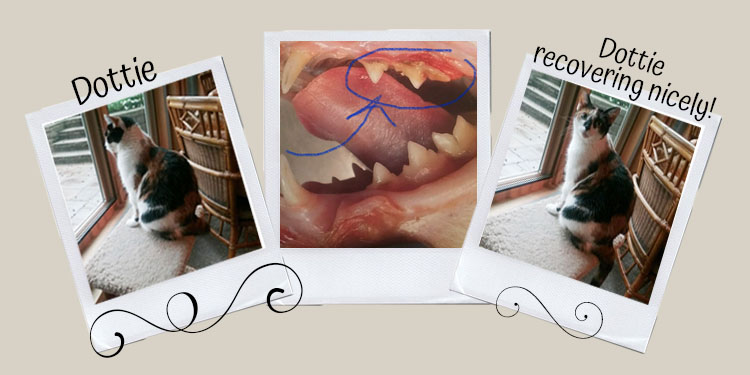
I checked in with Karen to see how Dottie is doing, and get her thoughts. She thanked me for helping spread the word and said Dottie is recovering nicely after having four molars removed. She also sent me the pics above – and while I always love seeing sweet Dottie happy, I may be keeping the center pic of her ordeal on the fridge as a daily reminder to get after my own cats with cleaning. Thanks again Karen & Dottie!

*Just so you know, I haven’t yet tried this Pet Wellbeing Healthy Gums for Feline Peridontal Health product yet (same link as above), so I just wanted to make that clear – nor are they sponsoring this post. In researching ways to alleviate the disease this product seemed most reliable for it’s reviews, 90 day money back guarantee and BBB accreditation, so I may be giving it a try.


Uncategorized

When Disaster Strikes: 5 Ways to Prepare Your Pet

cat-hotel-room-1-of-1-1050x700

September is Disaster Preparedness Month* with good reason: it is the height of hurricane season and as I write this Hurricane Florence is about to wreak havoc on the Carolinas. It is heartbreaking to try and imagine what it must be like to pack up on short notice and pray you have a home to come back to.

Even when folks do their best, there are news stories of pets left behind or that have escaped in the panic of trying to get to safety and are missing. So not only does a family need to worry about their home, but the whereabouts and safety of one of it’s members. And it’s not always about hurricanes. Family emergencies, power outages, and other problems with the home can mean having to pack up and go.

Under those circumstances, it is hard enough to get yourself together let alone your pet. With that in mind, here is a five point checklist to review and re-review as necessary so you will be prepared. Bad enough to deal with a tragedy that displaces you & your family, let alone the lack of resources to get your pet to safety.

  1. Keep Vaccinations Up To Date. This one is easy to disregard, but bringing your pet on the road or temporarily re-homing him could mean exposure to other people and animals. Even the most well behaved pet can become fearful and lash out at a temporary caretaker, and most boarding places won’t even accept a pet without current records. All of a sudden the lack of a vaccination can become your worst nightmare. Download your vets app if they have one to stay on top of health issues and also as a great resource for easy answers to questions when you are away.
  2. Never Underestimate the Value of a Pet Emergency Kit. Or overestimate the ease of putting one together. Start with a simple disposable litter box that you can pick up for around $10 at most grocery stores. Fill it with the other things listed here and store in the garage for easy access. Done. For box, include: List of medicines (or a reminder card to grab them along with where to find). A recent photo or three of your cat in case you get separated and need to provide it for reference.  A harness, blanket, catnip, a few cans of food and some treats. It also would be worth the effort to pick up a vial of Bach Rescue Remedy or some Calming Chews as most cats are nervous travelers. Finally, don’t forget the scoop and a few bags to dispose of litter. (The litter itself can be added from on hand supply unless you decide to include that as well).
  3. Cat Carriers. Here’s the thing about carriers. I think we all have one – somewhere – but because it is not a daily use item it’s working condition and size are not always front of mind. (One of mine was purchased when the girls were kittens, and just like a car seat or stroller, they have long outgrown it). You need a way to transport your cat that is safe and comfortable. Take time when you have it to pick one up and keep it near the emergency kit in the garage.
  4. Kitty Godparents / Pet Safe Places. I’m sure we all have a friend or family member who has stepped in to help with cat care when we are gone. But have you ever really talked with them about taking your cats if they need to be re-homed? And are they even a good longer term fit in the first place? Your cats need Godparents, or someone who is designated to step in to help with their care should anything happen to you. This step takes a little more thought and effort, but is HUGE in terms of the peace of mind when you may need it most. In an emergency when you need to be away but can’t take your cats with you, at least you can rely on the person you know won’t be put upon, which is so much better than trying to plead for help from someone who’s heart is just not into it. No Godparents? Create a list of pet safe places like vets who board or pet friendly hotels. Even with the internet, researching this when you need it takes valuable time. Just because a place boards doesn’t mean it’s a good place to leave your cat, so find the good guys and jot them down. You will still need to call and make arrangements but the list will save you the headache of knowing where to go.
  5. I.D. Tags / Microchip. While most dogs have up to date, legible tags as they are outside a lot, often this is not true for cats. Take a few minutes next time you are web surfing and order something useful. With so many options available – including digital tracking tags – this is a must. How awful would you feel if your cat got away and you were in an unfamiliar area? If they do get lost or separated from you websites such as Nextdoor and PetFBI can help reunite you, but having tags that are up to date and easy to read is half the battle.

As long as you are here, if you have a few more minutes I would highly recommend reading through the ready.gov pet preparedness social media tool kit information. When it comes to pet safety, a little extra effort goes a long way in the time of need. Don’t forget to bookmark this page to keep it handy or share with a friend!

*September is Disaster Preparedness Month, but June is Pet Preparedness Month. Really, any month is a good month to be prepared.